Understanding Subject and Predicate Worksheets
Subject and predicate worksheets are essential tools for educators and students alike. They help in reinforcing the fundamental components of sentence structure. By breaking down sentences into their core elements, learners can gain a clearer understanding of how sentences are formed. This foundational knowledge is crucial for improving writing skills and enhancing overall language comprehension.
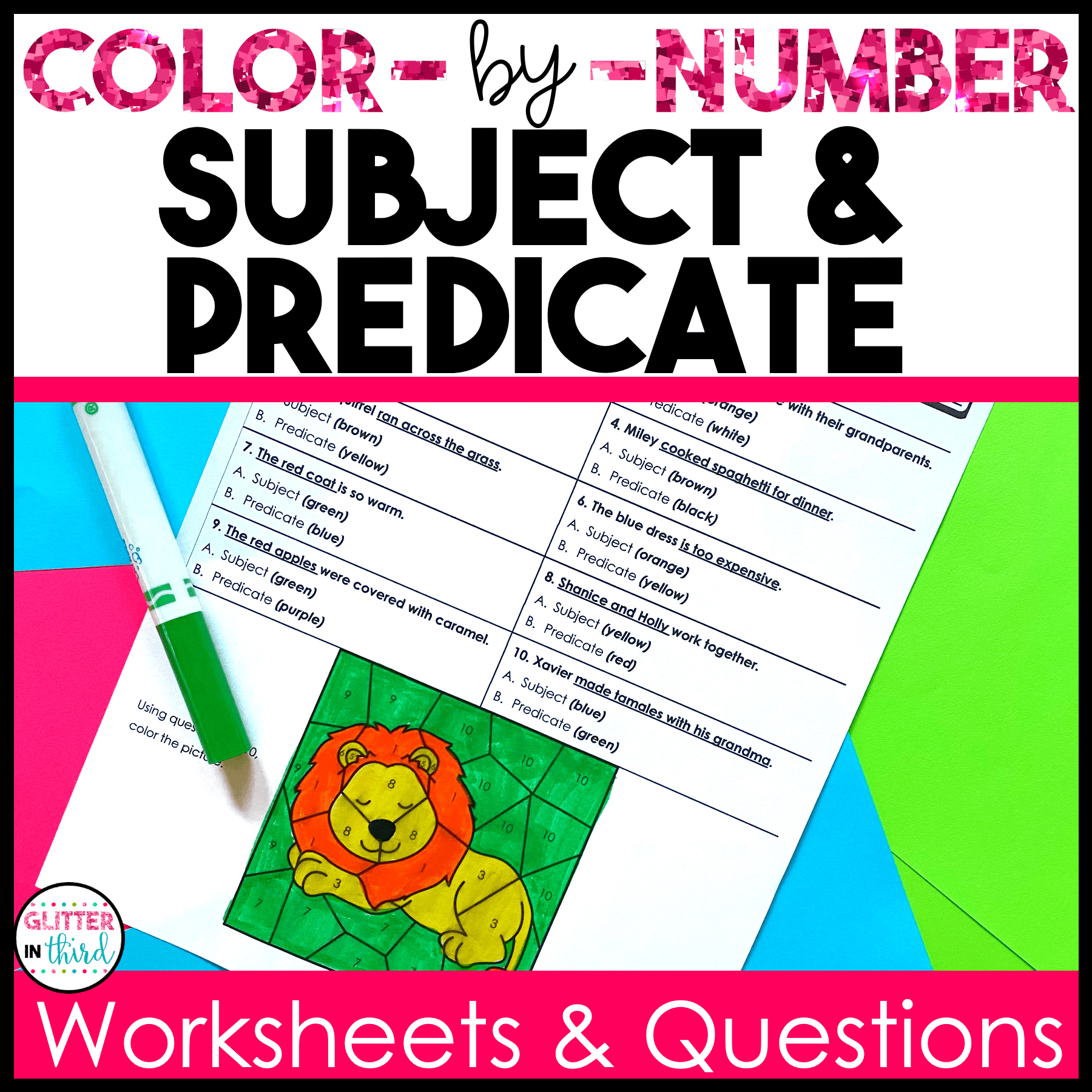
These worksheets typically include various exercises that challenge students to identify subjects and predicates within sentences. By engaging with these activities, students can develop their analytical skills and become more proficient in constructing grammatically correct sentences. As they practice, they also learn to recognize the role each component plays in conveying meaning.
Subject And Predicate Worksheet
A subject is the part of a sentence that tells who or what the sentence is about, while the predicate provides information about the subject, often including a verb. Understanding this distinction is vital for effective communication. Worksheets designed around these concepts often feature a mix of identification tasks, fill-in-the-blank exercises, and sentence construction activities.
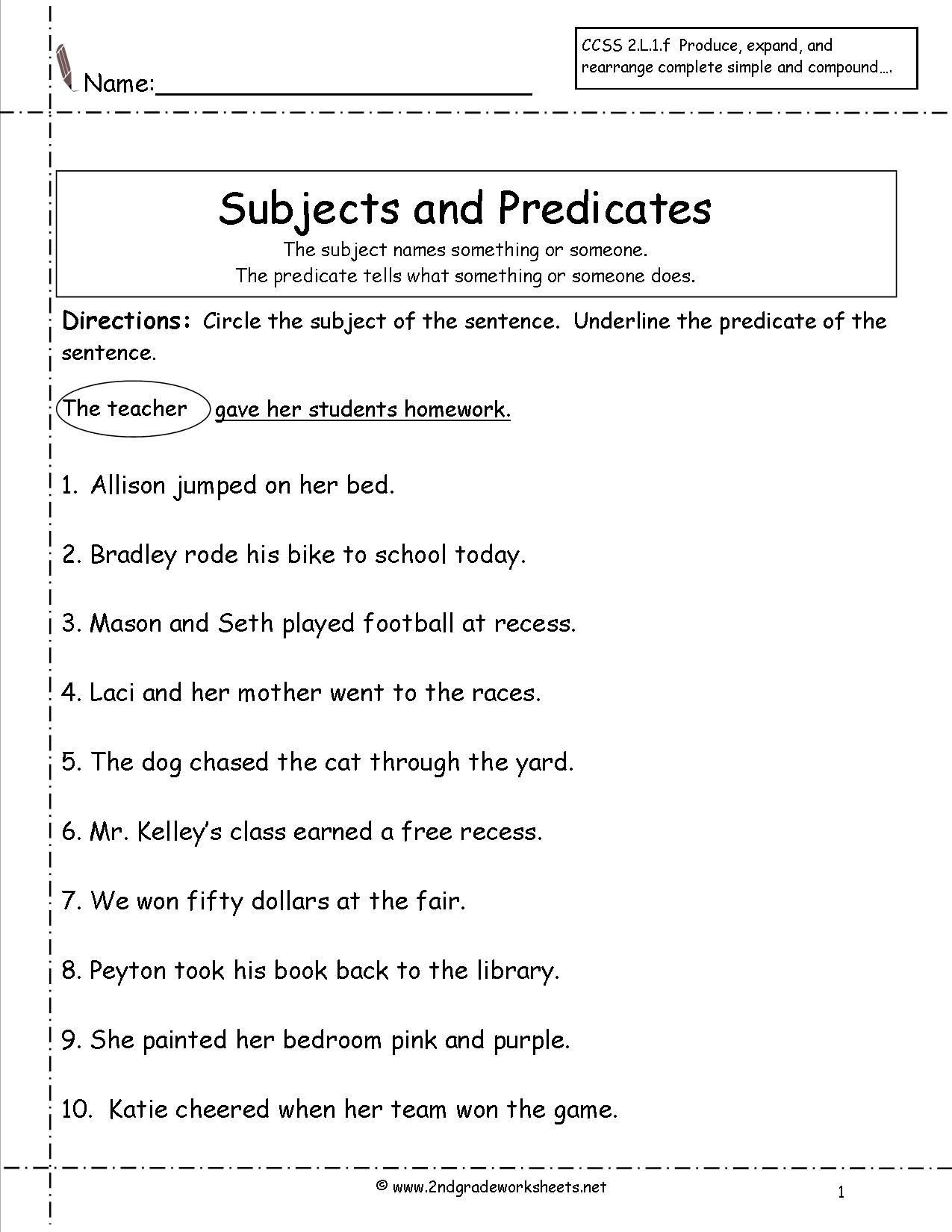
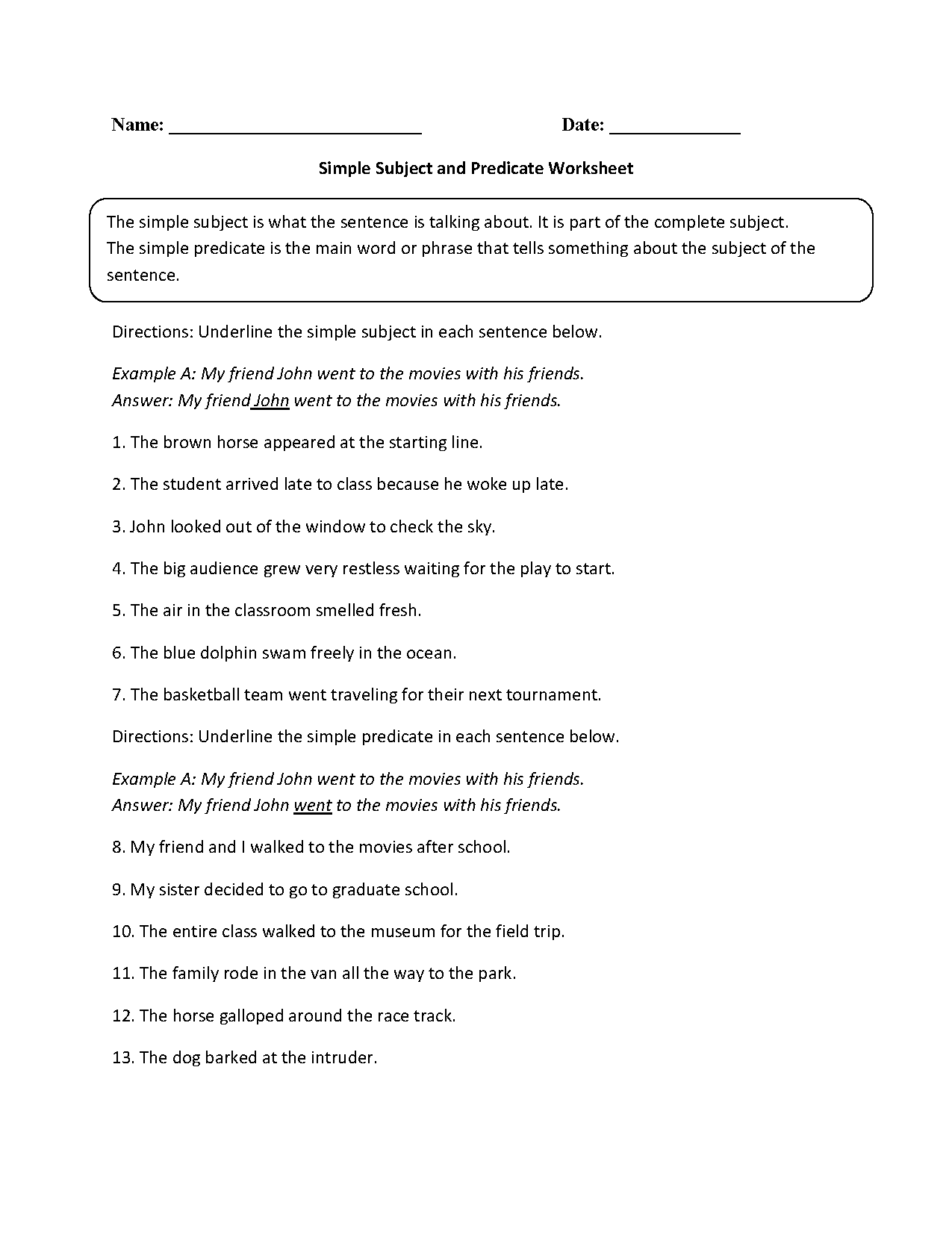
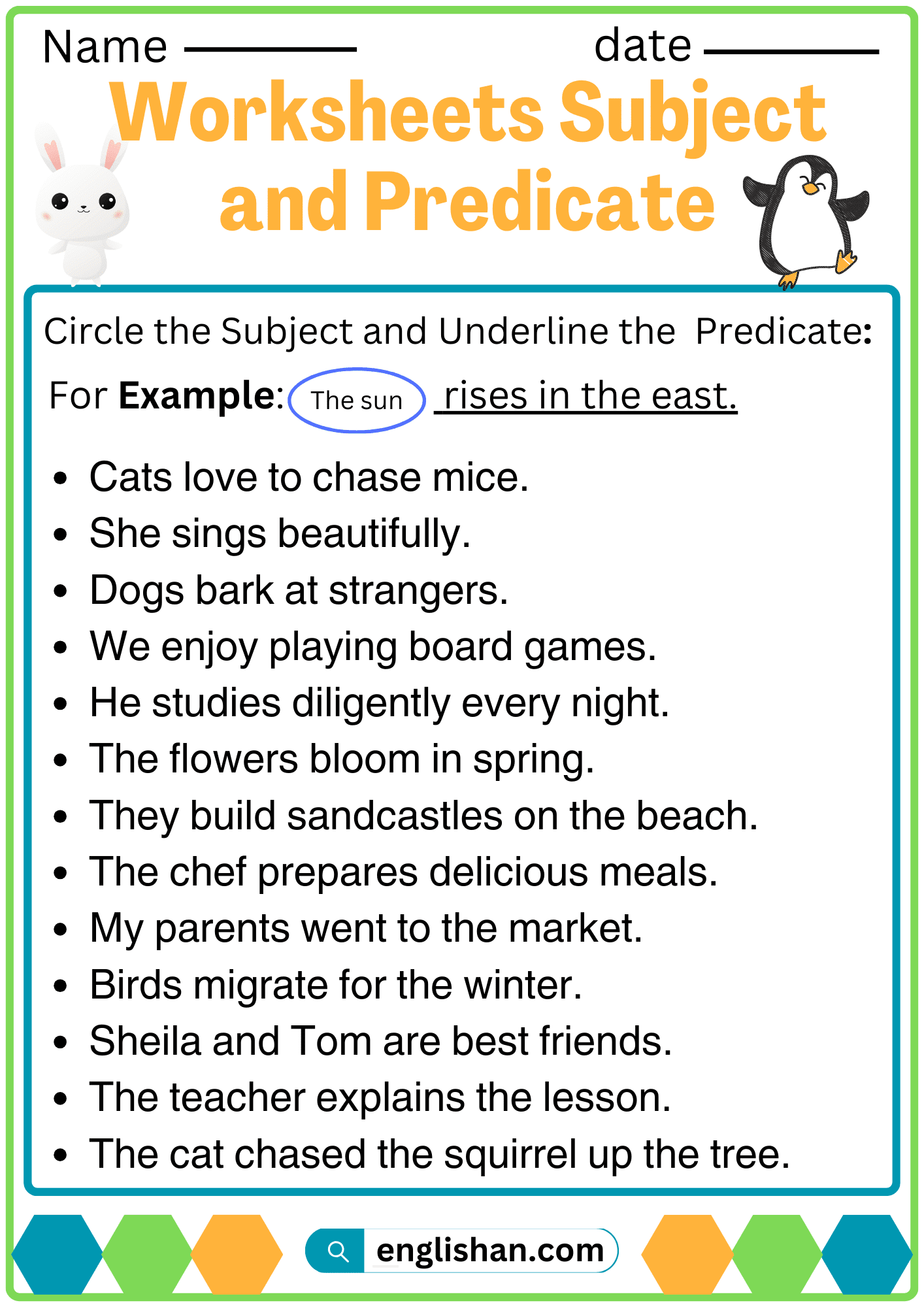
One common type of exercise found in subject and predicate worksheets is the identification task. In this activity, students are presented with sentences and asked to underline or highlight the subject and predicate. This exercise not only reinforces their understanding but also helps them visualize how sentences are structured. For example, in the sentence “The cat sleeps on the mat,” “The cat” is the subject, and “sleeps on the mat” is the predicate.
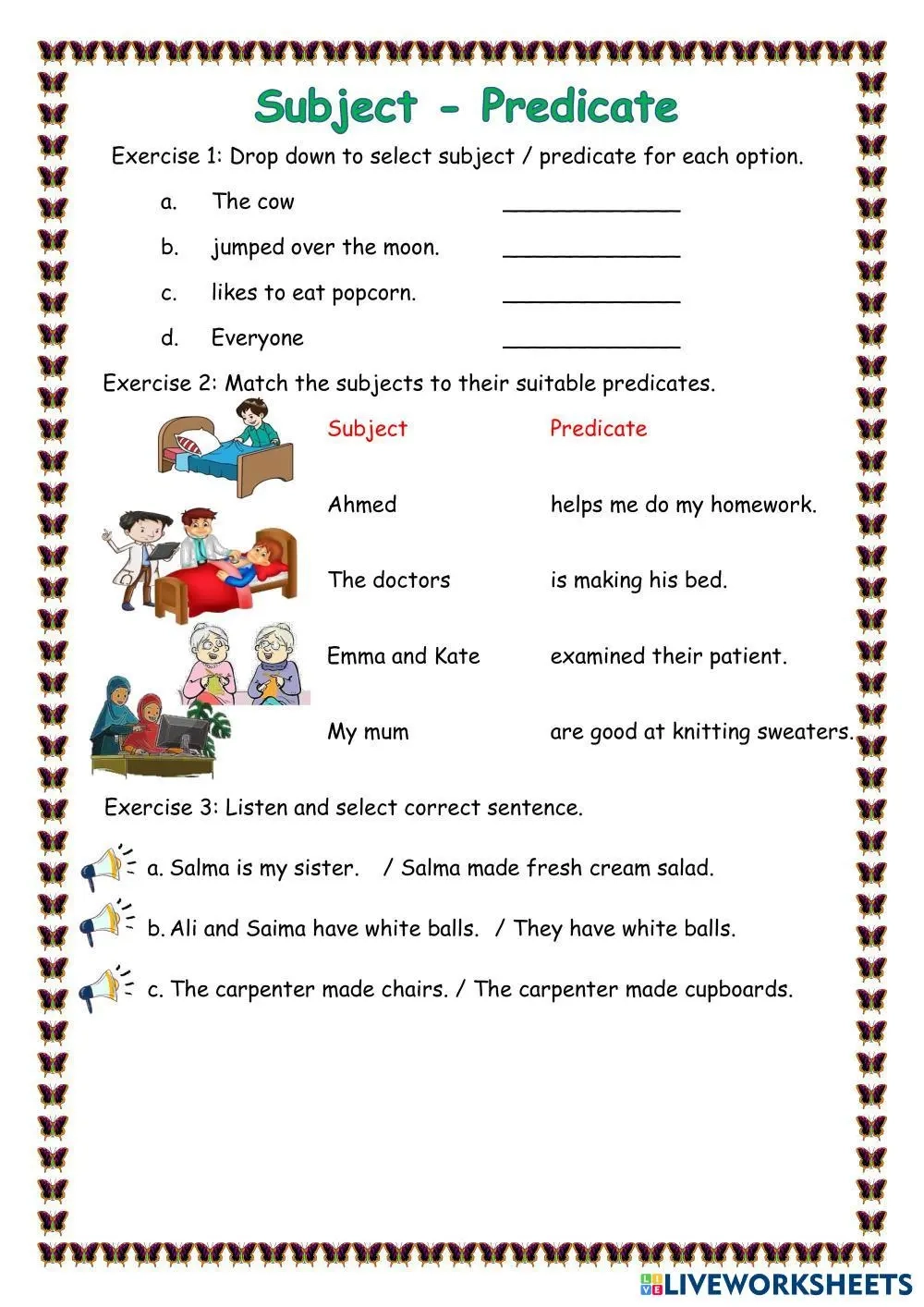
Another effective exercise involves fill-in-the-blank sentences where students must complete either the subject or predicate based on context clues. This type of activity encourages critical thinking as students must consider what makes sense within the framework of a complete sentence. Additionally, sentence construction exercises allow students to create their own sentences using given subjects or predicates, fostering creativity while reinforcing grammatical rules.
Teachers can also incorporate games and interactive activities into their lessons using subject and predicate worksheets. For instance, group activities where students collaborate to create sentences can make learning more engaging. Such collaborative efforts not only enhance understanding but also build teamwork skills among peers.
In conclusion, subject and predicate worksheets serve as valuable resources for mastering sentence structure. By practicing with these worksheets, students can improve their writing abilities and gain confidence in their language skills. Ultimately, a solid grasp of subjects and predicates lays the groundwork for effective communication in both written and spoken forms.
Download and Print Subject And Predicate Worksheet Listed below